First, Get to Know the Dance
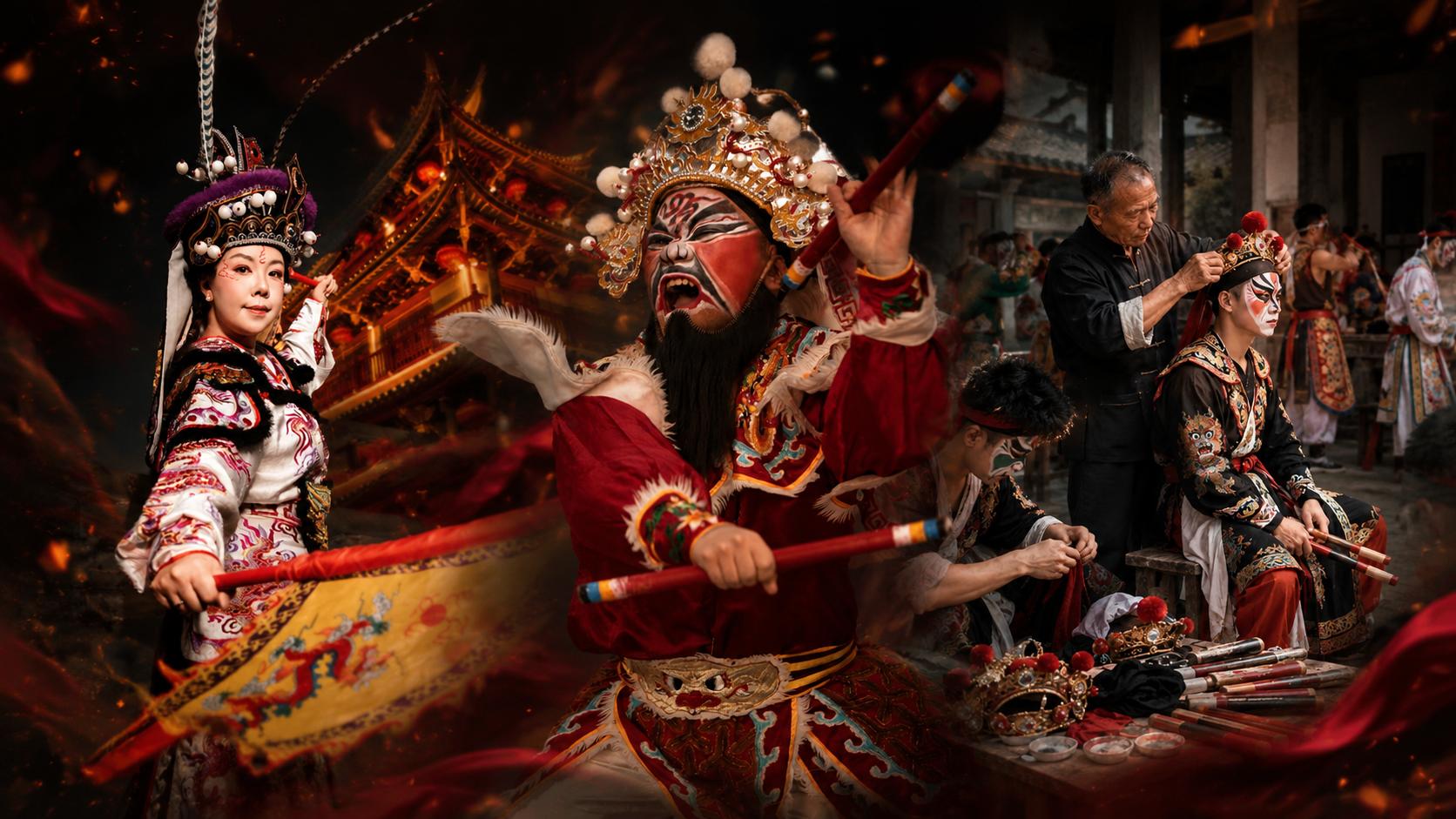
Yingge dance (Chaoshan folk stick dance) is a group dance performed by men, popular in the Chaoshan region. Dancers paint their faces, wear opera-style costumes, and hold short sticks in both hands, striking them together as they dance to drumbeats, with ever-changing formations and footwork. Its themes are mostly drawn from the stories of the Liangshan heroes. In performance, power and order coexist: the front row leads the dance, the back rows strike sticks in unison, and when the drums stop, the whole troupe freezes. In 2006, Yingge was added to the first batch of the national intangible cultural heritage extended list; the official entry can be found at Yingge intangible heritage entry. To learn about its contemporary spread, public footage from local media and documentaries is available. In recent years it has traveled beyond Chaoshan, repeatedly going viral in performances and on short-video platforms, but its roots remain in village ancestral halls and squares—to truly understand Yingge, it is best to return to where it grew.
For travelers, the hardest part of Yingge dance is not finding videos but understanding the live performance. The performance is mobile: the troupe moves along the street, dancing whenever it stops, and a complete performance may be spread over several hundred meters of street. Watch a video beforehand, and you can follow the formation changes on site; otherwise you may only see fragments and miss the most synchronized sections. The formations themselves tell a story: two columns advancing toward each other, circular encirclement, long and short sticks interweaving—each change corresponds to a turn in the drumbeat. When the drummer changes, the whole troupe changes; give your ears to the drums, and your eyes will naturally follow the troupe. Besides the common men's teams, there are also women's Yingge teams and youth teams in various places, with a lighter and livelier style; if you encounter them, they are worth watching to the end. The troupe's structure is also worth noting: lead dancer, stick bearers, drummers, and the rear section each have their roles. The front section handles the movements, while the rear section manages drum music and acrobatics. A performance is actually several small systems running at once; once you understand the division of labor, every advance and retreat of the troupe takes on meaning.
How to Watch a Live Performance
When watching Yingge, position matters more than timing. The sidewalks on both sides of the parade route are the standard viewing spots; once you have found your place, do not run back and forth following the troupe. To film the whole formation, find a straight section the troupe must pass through and arrive twenty minutes early. The preparation and closing moments before and after the performance are also worth watching: face painting, dressing, and headdress checks often happen openly backstage or at the assembly point. Most performers do not mind being photographed, but for close-ups, signal and ask for consent first. Families with children can take a different approach: don't insist on watching the entire performance—just pick two or three straight sections where the troupe passes and watch from fixed spots, resting at the hotel in between. Back home, let the children learn the stick-striking motion with two short sticks; the memory will stick firmly. Elderly viewers often feel a resonance with Yingge; similar folk traditions in Fujian and Guangdong recognize one another. Listening to their explanations often reveals more history than a guide's script.
The details of gongs, drums, and costumes are also worth noting: the lead dancer holds double sticks or a snake-shaped prop, and costume embroidery varies with each troupe's style. Some troupes feature painted face masks, continuing the tradition of opera face painting. If props are displayed on the sidelines, you can take a close look at the cloth wrapped around the sticks and the wear on the drumheads—traces left by years of rehearsal. Watch enough and you will notice that each troupe's footwork and rhythm differ; this is why veteran audiences follow different teams.
Putting Yingge into Your Itinerary
Yingge performances are mostly concentrated around festivals and folk events and are not visible every day, so confirm event dates before planning your itinerary. Yingge teams exist throughout Chaoshan, with those in Puning and Chaoyang particularly well known, but event times are subject to local announcements; do not plan on the assumption that performances happen daily. If your dates don't match, static folk arts such as ancient city architecture and porcelain shard decoration (qianci) have other entry points on the culture theme page; for an overall cultural route, see the three-day culture itinerary. Both Chaozhou and Shantou can connect with local folk information over two days. If you miss a formal event, there is another entry point: many teams rehearse on weekday evenings in squares or open spaces in front of ancestral halls. Watching rehearsal carries no ceremonial pressure, and you can see clearly how the footwork is trained. Whether it is open to viewers depends on the team; keep a quiet distance, do not rush or crowd, and the progress of youth teams from awkward to synchronized is visible to the eye. At rehearsals, coaches can often be seen using commands to refine every detail, move by move; behind each gesture are months of basic training. For travelers, a rehearsal is the most direct window into the cost of this craft—the synchronized minute on stage is built from countless evenings off stage.
During festivals, crowds are heavy. Viewers with children and elders are advised to stay away from the troupe's turning points, where congestion is most concentrated. When filming long videos, turn off the flash; put away selfie sticks when the troupe passes. These small actions determine whether the next generation of viewers can still stand this close. After the performance, the crowd surges; don't rush toward the exits. The area where the troupe closes its formation loosens first. Walk two intersections in the opposite direction of the parade route, and you can usually avoid the worst congestion while filling in the alleys you didn't see clearly earlier.
What You Take Home Is More Than Images
After watching a Yingge performance, most people remember the drumming rather than the visuals. When organizing your material at home, also note down the drum rhythms you heard—they are harder to reproduce than photos and more likely to evoke memories of the scene. To keep following, watch for event announcements from local culture and tourism departments and updates from intangible heritage protection organizations. Troupe names are worth remembering; on your next visit to Chaoshan, finding events by troupe is more effective than relying on dates and luck. Yingge has grown in popularity in recent years, and young teams post rehearsal clips on social media. Before you go, search for a troupe's recent activity—you can confirm event dates and also get to know the young faces you wouldn't recognize once they are painted.